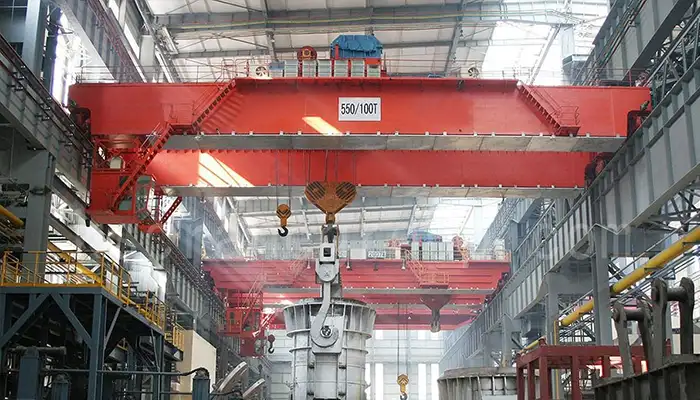
Single Trolley vs Dual Hoist Ladle Cranes: Safety Guide
menu_open
Content Quick Link
Single Trolley vs. Dual Hoist Ladle Cranes: Which Is Safer for Your Plant?
Key Takeaways – What Buyers Must Know
- Dual hoist ladle cranes offer redundancy and extra load control but come with higher cost and maintenance complexity.
- Single trolley cranes can be fully safe and efficient for light to medium ladle handling, short spans, or low-frequency operations.
- Safety, uptime, and compliance depend not just on hoist count but also service class, structural integrity, and operational planning.
- Proper hoist configuration selection directly affects plant safety, maintenance requirements, and lifecycle cost.
Introduction
Ladle handling cranes are at the heart of steel mills, foundries, and metallurgical plants. They move molten metal from furnaces to casting areas, often under extreme heat and heavy loads. A single mistake can lead to costly equipment damage—or worse, serious safety incidents. This makes the choice of crane configuration more than a technical detail; it’s a decision that affects your plant’s safety, efficiency, and compliance with regulations.
When deciding between a single trolley and a dual hoist ladle crane, many buyers instinctively assume that dual hoists are always safer. But it’s not that simple. Safety and efficiency depend on more than just hoist count. You need to consider the weight of the ladle, lifting frequency, service class, span, and maintenance capabilities before making a decision.
Why Hoist Configuration Matters
The configuration you choose affects both daily operations and long-term costs.
- Load handling: Dual hoists can distribute heavy or oversized loads, but they require precise synchronization. Single trolleys can handle moderate loads efficiently and safely.
- Maintenance: More hoists mean more components to inspect, maintain, and replace over time. A single trolley crane is simpler, easier to maintain, and often reduces downtime.
- Operational flexibility: Dual hoist cranes are better for high-frequency, long-span operations, while single trolleys perform well in smaller workshops or lighter service applications.
Practical tip: Don’t choose a crane based on assumptions. Ask the supplier for a comparison of hoist configurations based on your specific uptime requirements and operational conditions.
Safety Considerations
Safety isn’t just about hoist count—it’s about engineering, service class, and maintenance. A dual hoist crane may provide redundancy, but if it isn’t properly designed or maintained, it won’t automatically be safer.
- Ensure the crane meets recognized standards like ISO 4301, FEM 1.001, DIN 15018, and GB/T 3811.
- Check fatigue ratings and structural calculations for repeated lifts.
- Make sure control systems and limit switches are reliable and regularly tested.
Practical insight: A well-maintained single trolley crane that matches your plant’s lifting needs can be just as safe—and sometimes more reliable—than a dual hoist system.
Operational Efficiency and Uptime
Uptime is critical in steel production. The wrong crane configuration can increase downtime, slow production, and even cause unplanned maintenance costs.
- Single trolley cranes have fewer moving parts, which often results in shorter inspection times and simpler repairs.
- Dual hoist cranes require careful coordination; a failure in one hoist can sometimes affect the entire operation.
- Evaluate the crane’s service class, span, and frequency of lifts to determine which configuration will maximize your plant’s uptime.
Practical tip: Always ask for a maintenance plan and inspection schedule tailored to the chosen hoist configuration. This helps predict downtime and plan preventive maintenance.
Is Dual Hoist Always Safer?
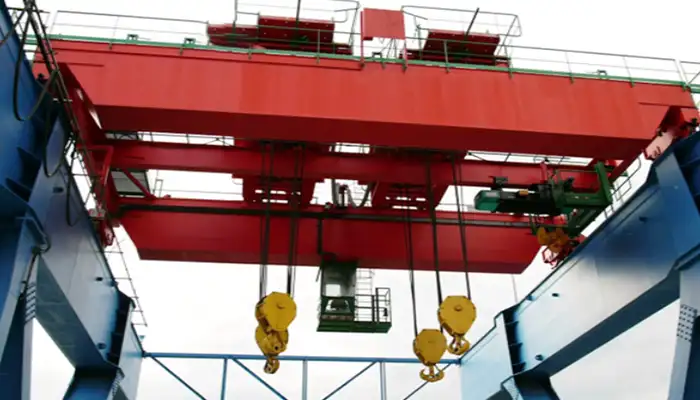
You might think, “Two hoists must be safer than one, right?” Well… not always. Sure, a dual hoist crane gives you some backup—if one hoist fails, the other might hold the load long enough to prevent a serious accident. But safety isn’t just about the number of hoists. It depends on how you use the crane, the weight of the ladle, and how well the system is maintained.
Dual hoists really shine in these situations:
- Heavy or oversized ladles: When your ladle is too heavy for a single hoist, splitting the load between two hoists keeps things safer.
- Long-span cranes: Wide cranes can make loads swing more. Two hoists help keep the ladle balanced.
- High-frequency lifts: If your operation is constantly moving molten metal, dual hoists reduce stress on each hoist, helping them last longer.
But hold on—there are some trade-offs you should know:
- Higher upfront cost: Two hoists aren’t cheap. You’re paying for extra hardware and more engineering.
- More complex controls: The hoists have to work together, which adds technical complexity and requires skilled operators.
- More maintenance: Two hoists mean double the checks. If one goes down, you might still have downtime.
Bottom line: Dual hoists can be safer, but mainly for heavy-duty, high-frequency, or long-span applications. For moderate loads or smaller cranes, a well-designed single trolley can be just as safe, simpler to run, and easier on your wallet.
When Single Trolley Designs Are Acceptable
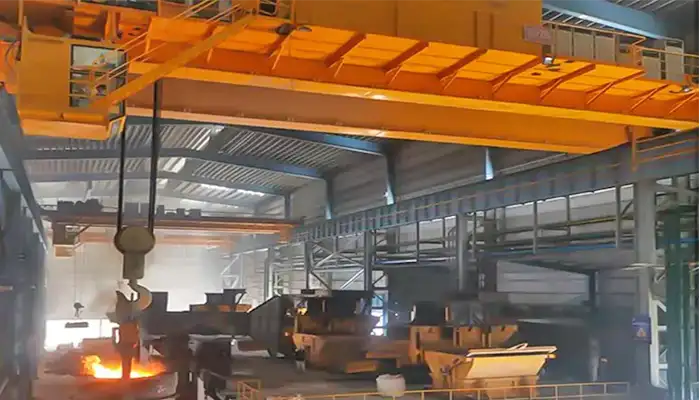
Not every ladle crane needs two hoists. A single trolley crane can be perfectly safe, efficient, and easier on your budget—if it’s designed and maintained correctly.
Single trolley setups work best in these scenarios:
- Light to medium ladle weights: If your ladles aren’t overly heavy and you’re not lifting nonstop, a single hoist can handle the job safely.
- Short span or small workshops: Smaller cranes don’t need the extra stability a dual hoist provides.
- Strict compliance: Even a single hoist must meet ISO, FEM, DIN, or GB service class ratings to ensure safe and reliable operation.
The benefits of choosing a single trolley include:
- Simpler maintenance: One hoist is easier to inspect, lubricate, and keep in good shape.
- Lower operational complexity: No need to worry about hoist synchronization or extra control systems.
- Cost savings: You save on upfront capital and reduce long-term lifecycle costs, without compromising safety when used appropriately.
Bottom line: Single trolley cranes aren’t “less safe”—they’re just simpler. For moderate loads and smaller operations, they’re often the smarter choice.
Maintenance Complexity Comparison
Maintenance is a big factor that often gets overlooked when choosing between single and dual hoist ladle cranes. It’s not just about fixing things when they break—it affects downtime, safety, and total cost over the crane’s life.
Here’s how the two setups compare:
| Aspect | Single Trolley | Dual Hoist |
|---|---|---|
| Routine inspections | Quick and straightforward | Takes longer, must check hoist synchronization |
| Spare parts | Fewer parts to stock | More components to monitor and maintain |
| Failure risk | Simple to repair one hoist | Repairs are more complicated if one hoist fails |
| Downtime | Usually shorter | Can be longer because both hoists must be coordinated |
Practical tip: Don’t underestimate the value of maintenance simplicity. In many steel mill operations, easier upkeep can save as much money and headaches as redundancy—especially when calculating the total cost of ownership (TCO).
Safety vs. Operational Efficiency
When it comes to ladle cranes, safety isn’t just about having one hoist or two. There’s a lot more to consider.
- Right hoist, right structure: Choosing hoists that match your ladle weight and frequency, along with a strong, fatigue-tested crane structure, is the foundation of safety. One poorly sized hoist can be riskier than a well-designed dual system.
- People and process matter: Even the best crane won’t help if operators aren’t trained, maintenance isn’t regular, or lifting protocols are ignored. Preventive maintenance, proper training, and clear operational rules reduce accidents, downtime, and compliance headaches.
- Efficiency trade-offs: If your plant handles moderate loads with lower lift frequency, a single trolley crane may actually improve uptime and simplify operations. On the other hand, dual hoist systems shine in heavy-duty, high-frequency lifting where stability and redundancy are critical.
Practical takeaway: Safety and operational efficiency go hand-in-hand. It’s not always “more hoists = safer.” Look at your plant’s loads, lifting frequency, staff training, and maintenance capabilities before deciding.
FAQ: Questions This Guide Answers
1. Is dual hoist always safer than a single trolley?
Not necessarily. Dual hoist cranes offer redundancy, which is helpful for very heavy ladles or long-span operations, but they also bring higher complexity and maintenance needs. Safety depends on proper hoist sizing, structural integrity, and fatigue-tested components, not just hoist count.
2. When is a single trolley ladle crane acceptable for steel mill operations?
Single trolley cranes are safe and cost-effective for light to medium ladle weights, moderate lifting frequencies, and smaller spans or workshops. They must still meet ISO, FEM, DIN, or GB service class ratings to ensure operational safety.
3. How do maintenance and downtime risks compare between single and dual hoist cranes?
- Single trolley: Simpler inspections, fewer spare parts, and shorter downtime when repairs are needed.
- Dual hoist: More components to monitor, synchronization checks required, and potentially longer downtime if one hoist fails.
Practical tip: Don’t overlook maintenance simplicity when evaluating total cost of ownership (TCO).
4. How to choose a ladle crane based on plant uptime, ladle weight, and operational frequency?
Consider the combination of load size, lifting frequency, and your plant’s operational priorities. Single trolley cranes may offer higher uptime for moderate workloads, while dual hoist systems are better suited for extreme loads or continuous high-frequency operations. Always factor in operator training, preventive maintenance, and structural integrity.
Conclusion
Choosing between a single trolley and dual hoist ladle crane isn’t just about picking the “safer” option. Safety, efficiency, and lifecycle cost all depend on your plant’s specific conditions—things like ladle weight, span, lifting frequency, and maintenance capabilities.
Bottom line for buyers:
- Dual hoist cranes shine in heavy, high-frequency, or long-span operations where redundancy and load stability are critical.
- Single trolley cranes can be fully safe and more cost-effective for lighter loads, shorter spans, or simpler workshop setups.
- Always consider service class, structural integrity, fatigue life, and regulatory compliance along with the hoist configuration.
By weighing these factors carefully, you can choose a ladle handling crane that keeps your operators safe, maintains high plant uptime, and protects your investment—whether you’re operating in the EU, Middle East, Southeast Asia, or any global market.
“Before you commit to a ladle handling crane, ask your supplier for a hoist configuration comparison. Make sure it considers your plant’s uptime needs, ladle weight, and lifting frequency. Take the time to evaluate both safety and maintenance implications—this simple step can save you downtime, unexpected repairs, and regulatory headaches down the line.”

Article by Bella ,who has been in the hoist and crane field since 2016. Bella provides overhead crane & gantry crane consultation services for clients who need a customized overhead travelling crane solution.Contact her to get free consultation.